
Appian

Appian builds enterprise software that automates business processes.
Their platform helps large organizations take work that normally lives across emails, spreadsheets, legacy systems and manual approvals and turn it into structured, automated workflows that can be tracked and scaled.
This is not consumer* software and not SMB focused. Appian is built for complex, regulated, high volume environments where speed, compliance and visibility matter.
If I had to explain it simply:
Appian helps big organizations get work done faster with fewer people and fewer mistakes.
What the platform actually includes
Appian is sold as a single integrated platform, not point tools.
Let’s companies build internal apps quickly without large engineering teams
Used for dashboards, intake forms, approval systems and operational tools
Designed so business teams and IT can work together instead of everything bottlenecking with developers
Workflow and case management
Orchestrates multi step processes across teams and systems
Common use cases include claims processing, onboarding, procurement, compliance reviews, investigations, and customer service
Tracks who did what, when and why which matters in regulated industries
Automation and integrations
Connects to existing systems like ERP, CRM, databases, and third party apps
Automates repetitive tasks and handoffs
Often used to modernize workflows without ripping out legacy systems
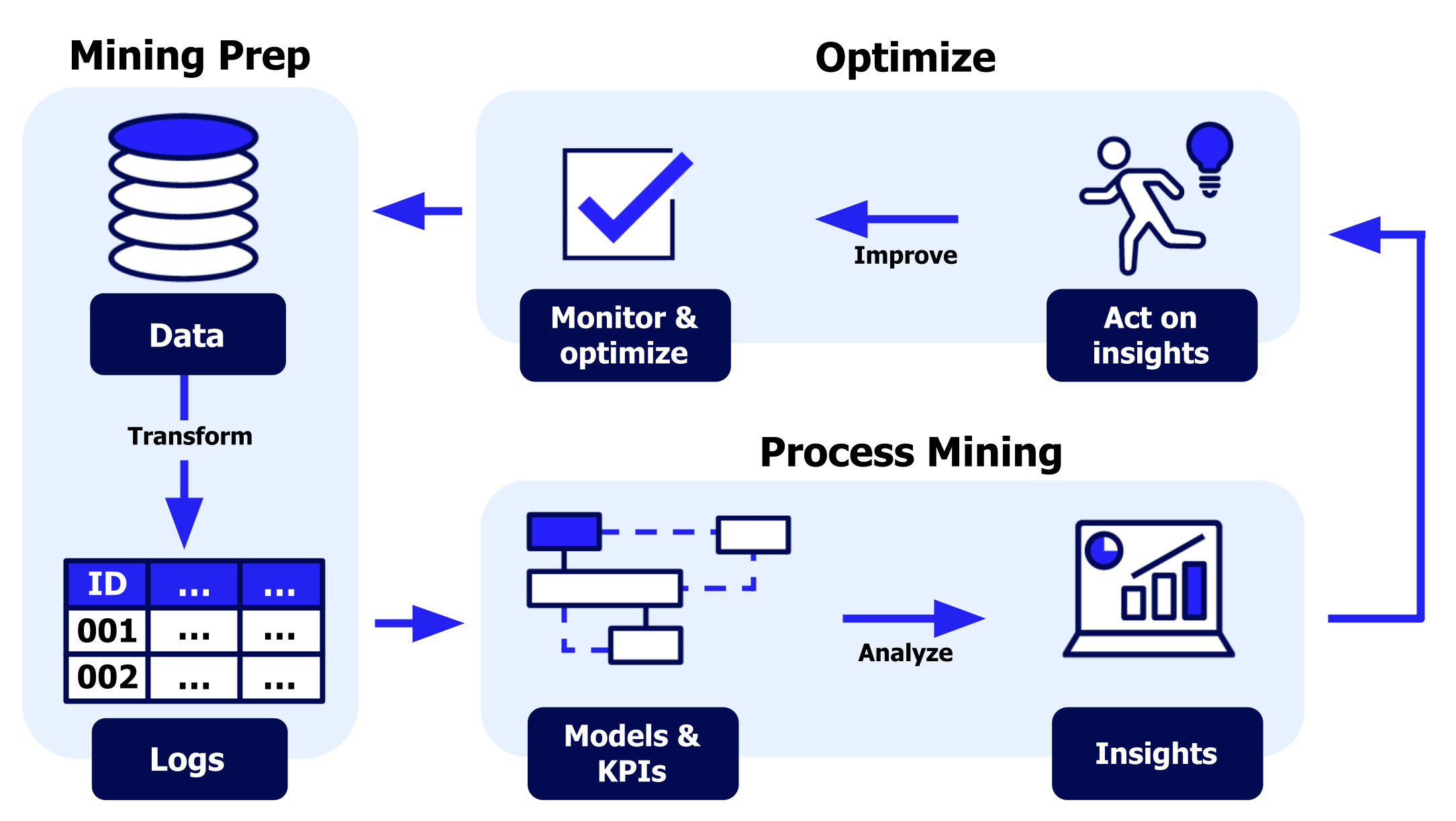
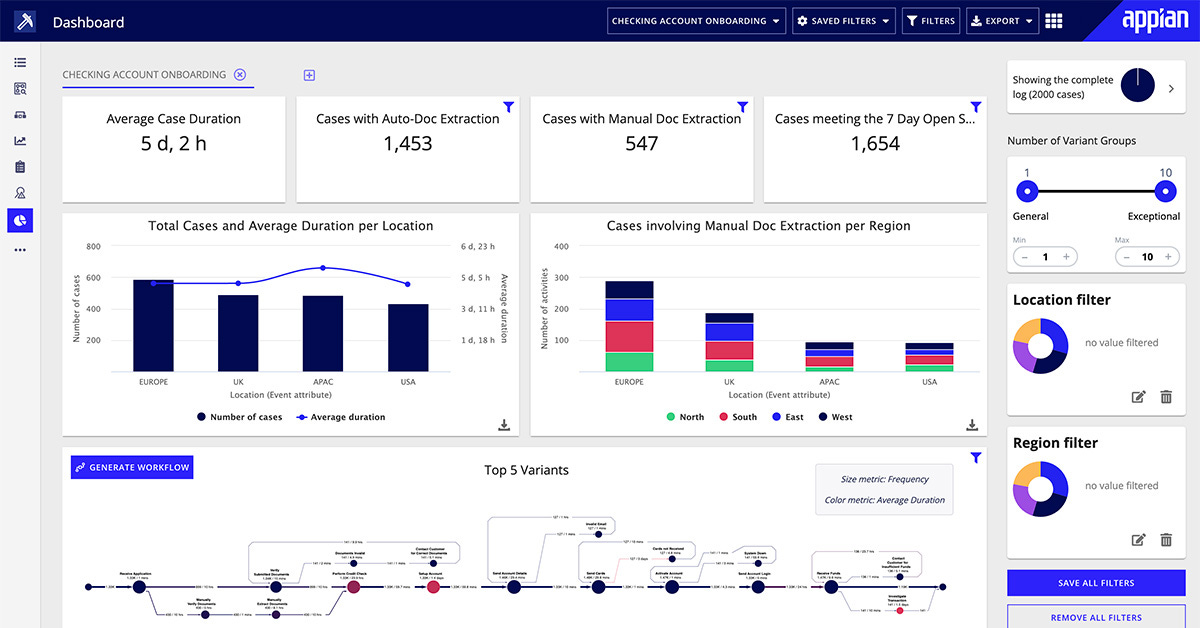
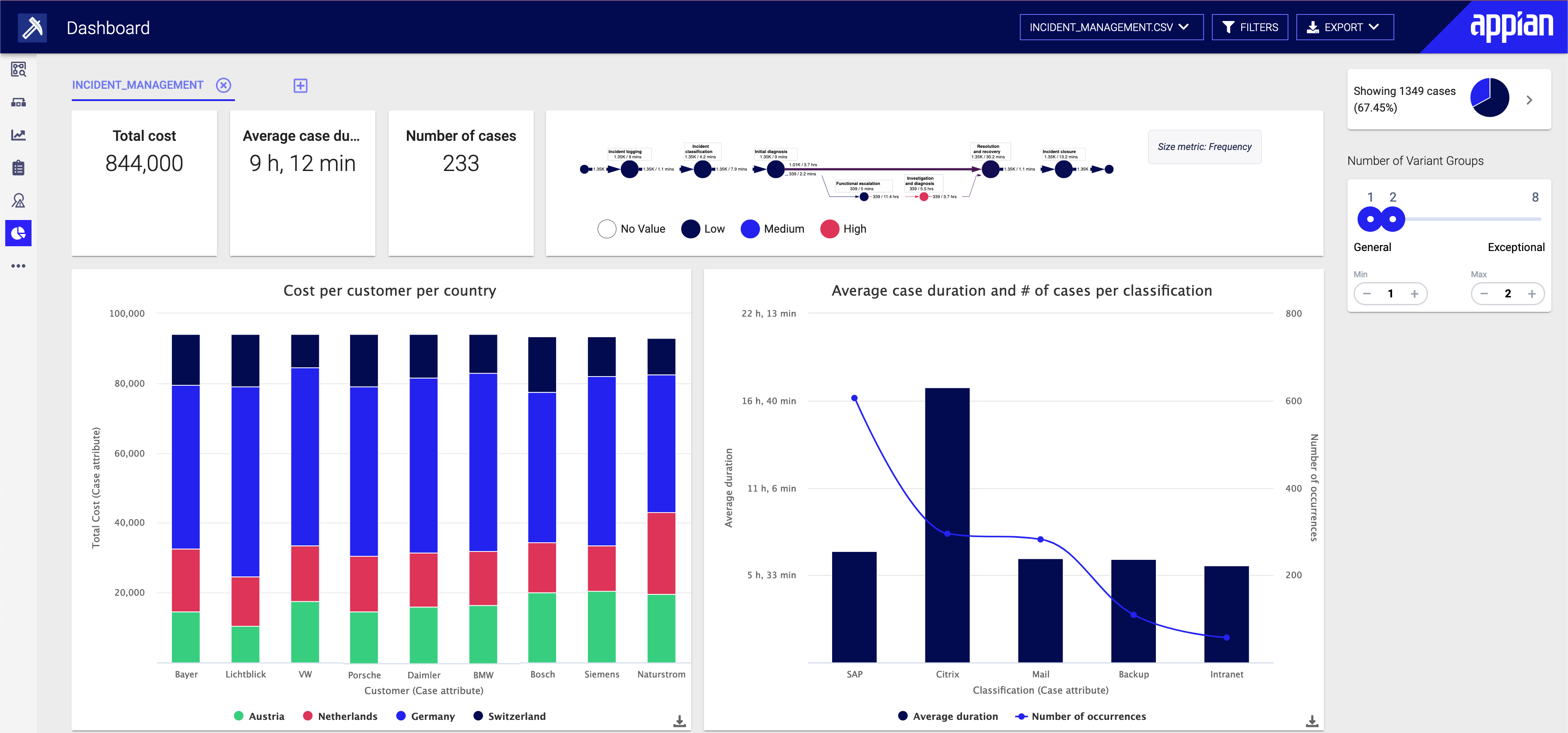
Data fabric and process intelligence
Pulls data from multiple sources into a single logical view
Lets users analyze how processes actually run vs. how leadership thinks they run
Identifies bottlenecks, delays, reworkand inefficiencies
AI and process mining
Uses machine learning and generative AI to surface insights
Helps companies identify where automation will have the biggest impact
This is positioned as augmentation not replacement of human decision making
Who uses Appian
Customers are almost entirely large enterprises and government agencies.
They explicitly focus on organizations with:
Thousands of employees
Complex internal processes
Heavy compliance or audit requirements
Key verticals
Government and defense
Financial services
Insurance
Life sciences and healthcare
Manufacturing
Energy
Telecommunications
Government exposure
Government is a major part of Appian’s business.
They sell heavily into:
US federal agencies
State and local governments
Defense and national security organizations
This brings:
Long sales cycles
Sticky contracts once deployed
Sensitivity to budgets, shutdowns, and procurement timing
They operate a dedicated government cloud environment designed to meet strict security standards.
How Appian makes money
Appian has 2 revenue streams.
Subscription revenue
This is the core of the business.
Customers pay recurring fees to use the platform
Pricing is typically per user or per application
Subscriptions are often multi year and billed in advance
Cloud subscriptions are the fastest growing portion
This is high margin software revenue and what investors focus on most.
Professional services
Implementation
Custom application development
Training and onboarding
Partnerships and ecosystem
Appian relies heavily on global systems integrators to sell and deploy at scale.
Major partners include:
Accenture
Deloitte
PwC
EY
KPMG
Capgemini
Tata Consultancy Services
These firms:
Bring Appian into large enterprise deals
Handle complex implementations
Expand Appian’s reach without Appian hiring massive services teams
The partner ecosystem is critical. When partners are engaged, deal sizes and stickiness tend to increase.
Competitive landscape
Appian sits in a crowded but fragmented space.
Who they compete with
Other low code platforms
Legacy BPM vendors
Large enterprise software suites that offer workflow tools
Internal custom development teams
Why customers choose Appian
Strong end to end process focus
Deep workflow and case management capabilities
Ability to modernize without replacing core systems
Strong reputation in government and regulated industries
Where competition can be tough
Price sensitivity in commercial enterprise
Large vendors bundling workflow into broader suites
Customers choosing internal builds for simpler use cases
Litigation overhang
Appian has been involved in a long running legal dispute with a competitor related to alleged misuse of trade secrets.
This case has:
Produced very large headline verdicts in the past
Been partially overturned and sent back to retrial
Created uncertainty around timing and outcome
Investors should view this as:
Not a core part of the business model
A potential upside surprise or continued overhang
Something that can cause volatility without changing fundamentals
Quarter overview
This earnings report was solid and very on brand. No hype, no blowout headline surprise, but clean execution where it matters most.
The story stayed consistent:
Cloud subscriptions kept growing at a strong clip
Retention stayed healthy
Services grew faster but remained lower margin
Guidance reinforced steady growth rather than acceleration
This was not a “rip your face off” quarter. It was a confidence building quarter.
Revenue breakdown
Total revenue
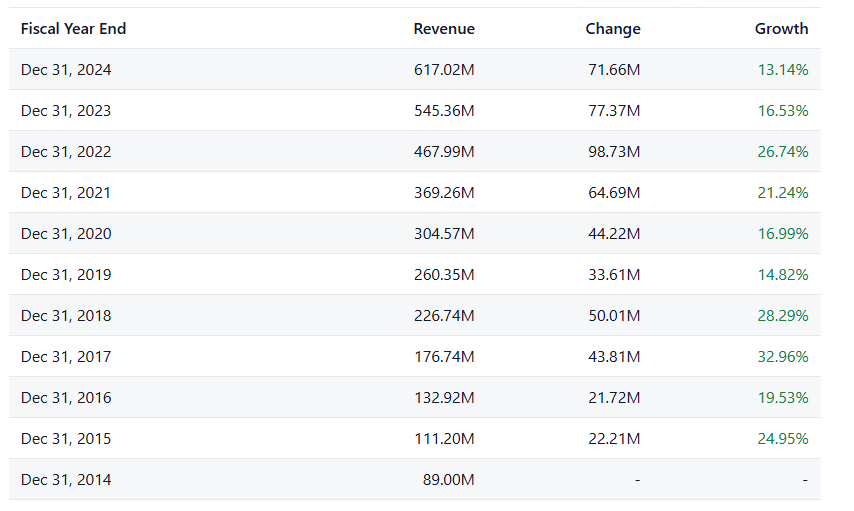
Total revenue grew a little over 20% year over yaer, which keeps Appian firmly in the healthy growth camp for enterprise software tied to large customers and government contracts.
The important part is not just growth, but where it came from.
Cloud subscriptions
This is the metric Wall Street actually cares about.
Cloud subscription reveenue grew low 20s percentt year over year
It made up the majority of total subscription revenue
This line continues to be the primary growth engine
This confirms:
Customers are moving more workloads to Appian’s cloud
Existing customers are expanding usage
The platform remains sticky once deployed
Total subscriptions
Total subscription revenue also grew around 20% year over year, showing that:
Cloud growth is not cannibalizing overall subscription demand
New customer adds plus expansions are both contributing
Professional services
Services revenue grew faster than subscriptions, closer to the high 20s percent range.
This usually happens when:
New deployments ramp
Large projects move from contract to execution
However, management is very clear that services are not the long term margin driver. This growth is supportive but not the main valuation input.
Retention and customer behavior
One of the strongest signals in the report was net revenue retention above 110%.
What that means in plain English:
Customers are not just staying
They are spending more year after year
This tells you:
Appian is not a nice to have tool
Once embedded into workflows, ripping it out is painful
Expansion happens organically as more processes move onto the platform
Retention above 110% is very respectable for enterprise focused software, especially with government exposure.
Customer mix and verticals
Government exposure
Government remained roughly one third of total revenue.
That cuts both ways:
Positive: long contracts, strong security moat, less churn
Negative: lumpy deal timing and budget sensitivity
Importantly, management framed government demand as stable, not weakening.
Commercial enterprise
Commercial customers showed steady demand, particularly in:
Financial services
Insurance
Life sciences
No signs of a collapse in enterprise spending, but also no claim of sudden acceleration. This fits the broader macro environment.
Margins and profitability
Gross margins
Subscription gross margins stayed very high, near the upper 80s percent range
Services margins remained much lower, as expected
This mix dynamic continues to matter. As cloud subscriptions grow faster than services, overall margins should gradually improve.
Operating leverage
Operating losses continued to narrow
Costs were controlled relative to revenue growth
Management is clearly walking the line of:
Grow fast enough to stay relevant
But not burn cash irresponsibly
They are not in a rush to maximize short term profits, but the path toward improved operating leverage is visible.
Cash flow and balance sheet
Cash position remained solid
No liquidity stress signals
No need for near term capital raises
This matters because Appian can:
Invest through slower macro periods
Continue product development
Absorb legal expenses without existential risk
Update Jan15th, 2026
1. Big U.S. Army contract opportunity
Appian announced that the U.S. Army awarded a new Enterprise Agreement that could be worth up to $500 million over 10 years for Appian platform licenses, support, cloud services, and maintenance. The Army also gave conditional Authorization to Operate for Appian Defense Cloud in a secure IL5 environment. This means the Army can deploy Appian’s AI and process automation tech more broadly across its systems.
What it means:
That’s a meaningful commercial validation of Appian’s AI automation platform and a potentially large revenue stream over time. Defense contracts move slower than typical enterprise deals, but this gives Appian a long runway of sales opportunities across the Army’s IT landscape and reinforces its government pipeline