
American Superconductor Corp
AMSC

American Superconductor Corporation (AMSC) has quietly transformed from a niche superconducting technology company into one of the more differentiated power electronics providers serving the North American electrical grid.
The investment opportunity is no longer centered around superconducting wire technology. Instead, the company has become an increasingly important supplier of dynamic power control systems that enable utilities, renewable energy projects, semiconductor fabrication plants, military installations, and hyperscale data centers to maintain stable electrical networks under increasingly volatile operating conditions.
Global electricity demand is entering what could become its fastest growth cycle in decades. Artificial intelligence infrastructure, cloud computing, industrial reshoring, electrification, and renewable generation are placing unprecedented stress on transmission and distribution systems that were largely designed decades ago.
While many investors focus on power generation, the larger bottleneck increasingly appears to be grid stability and power quality.

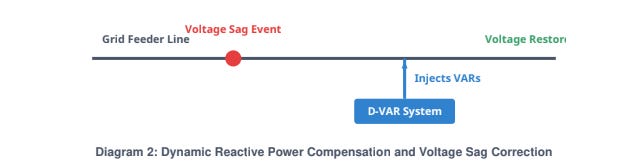
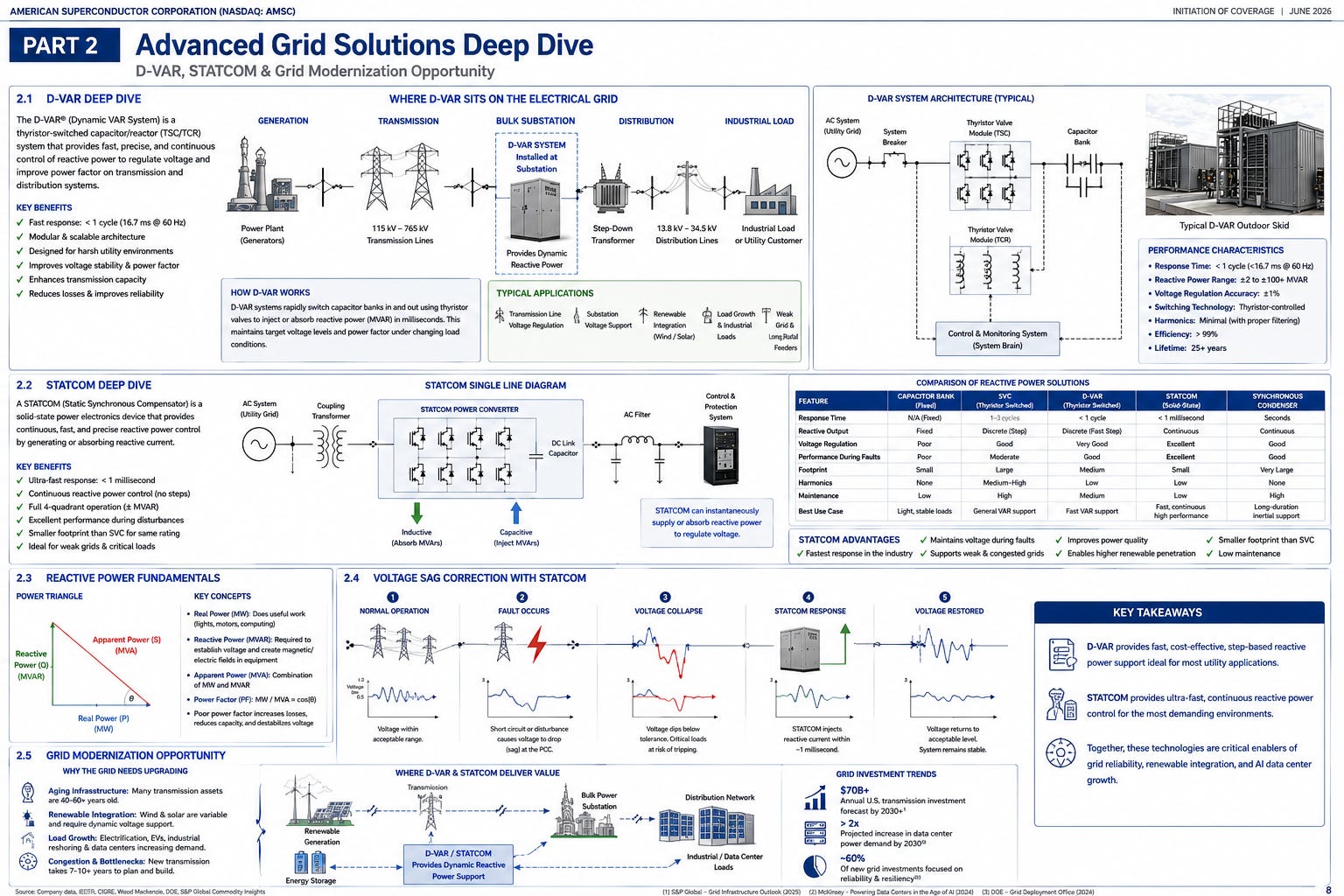
AMSC addresses this challenge through proprietary grid control solutions including D-VAR and STATCOM systems that inject or absorb reactive power in milliseconds, stabilizing voltage and improving power quality during rapidly changing electrical conditions.
The company also maintains a growing defense business supplying electrical protection systems for the U.S. Navy while expanding its utility exposure through acquisitions and organic growth initiatives.
Fiscal 2025 represented another major step forward for AMSC, with annual revenue reaching approximately $299M, representing roughly 34% YoY growth while backlog expanded toward $280M, providing significant visibility into future revenue generation.
As AI infrastructure spending accelerates and utilities continue investing in grid modernization, AMSC appears increasingly well positioned at the intersection of two structural megatrends:
• Power quality and grid resiliency
• High growth electrical infrastructure investment
Thesis 1:
AI Infrastructure Requires Grid Infrastructure
The AI investment cycle extends well beyond semiconductors.
Every new hyperscale AI campus requires reliable high-voltage electrical service capable of handling massive and rapidly changing loads. Voltage fluctuations, harmonic distortion, and reactive power requirements become increasingly important as GPU clusters expand.
AMSC provides equipment designed specifically to solve these problems.
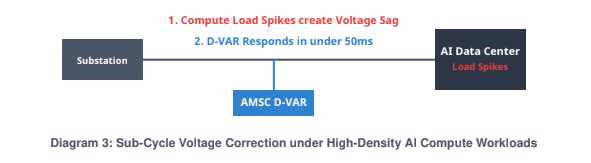
As data center power demand rises, dynamic grid stabilization equipment should experience secular demand growth.
Thesis 2:
Grid Modernization Has Become a National Priority
North American transmission network is aging while electricity demand continues rising.
Utilities increasingly require dynamic voltage regulation and power quality solutions to integrate renewable generation and maintain reliability.
D-VAR and STATCOM systems represent a relatively small capital investment compared to building entirely new transmission infrastructure while providing immediate improvements in voltage stability and system resilience.
Thesis 3:
Defense Provides Diversification
Unlike many utility suppliers, AMSC maintains meaningful exposure to US Navy electrical systems and ship protection technologies.
Defense revenue provides diversification away from utility capital spending cycles while strengthening long-term government relationships.
Thesis 4:
Operating Leverage Is Beginning to Materialize
The business has crossed an important scale threshold.
Recent quarters have demonstrated expanding margins, improving profitability and stronger cash generation as fixed manufacturing costs are leveraged across larger revenue volumes.
Management has now demonstrated multiple consecutive profitable quarters while backlog remains near record levels.
COMPANY HISTORY
American Superconductor was founded in 1987 with the objective of commercializing high-temperature superconducting technology for electric power applications.
During its early years, investor attention focused primarily on superconducting wire development and future electric transmission applications.
The company later expanded aggressively into wind turbine electrical control systems, particularly through partnerships in China. Those relationships eventually deteriorated following contractual disputes that significantly impacted revenue and forced a strategic restructuring.
Rather than disappear, AMSC reinvented itself.
Management shifted resources toward advanced grid electronics, reactive power compensation systems, industrial power quality solutions and defense technologies.
This transition fundamentally changed the company’s business model.
Today AMSC operates primarily as a provider of power control systems designed to increase reliability, resilience and stability across modern electrical networks while supporting military electrical infrastructure and industrial electrification.
The transformation has positioned the company to benefit from structural investment themes that were largely absent a decade ago, including AI infrastructure, renewable integration, domestic manufacturing expansion and utility modernization.
BUSINESS OVERVIEW
AMSC develops power control technologies that enable customers to transmit, distribute and consume electricity more efficiently while maintaining grid stability under dynamic operating conditions.
The company operates through 2 primary end markets.
Grid Solutions
Grid solutions represent the company’s largest business.
Products include dynamic voltage regulation systems, STATCOM solutions, power electronics, protection equipment and utility control systems used to stabilize electrical networks and improve power quality.
Customers include utilities, renewable developers, industrial facilities and increasingly large semiconductor and data center operators requiring stable electrical infrastructure.
Defense Solutions
AMSC supplies electrical protection and power management technologies for the US Navy and related defense applications.
These systems improve survivability and electrical performance aboard naval vessels while providing long duration government program exposure.
Strategic Positioning
Rather than competing directly with utilities or power producers, AMSC occupies a critical enabling layer within the electrical ecosystem.
Its technologies allow existing infrastructure to support larger electrical loads while maintaining voltage stability and improving system reliability.
As electricity demand accelerates from AI computing, electrification and industrial reshoring, this positioning may become increasingly valuable across both utility and industrial markets
AI Infrastructure, Defense & Competitive Positioning
THE AI POWER INFRASTRUCTURE OPPORTUNITY
AI is driving one of the largest electrical infrastructure expansions in modern history.
Investor attention has largely focused on semiconductor manufacturers and hyperscale cloud providers. Far less attention has been paid to the electrical infrastructure required to support these facilities.
Large AI campuses consume enormous amounts of electricity.
Individual hyperscale facilities increasingly require several hundred megawatts of power, while next generation campuses may exceed one gigawatt of connected load. These facilities create rapidly changing electrical demand as GPU clusters transition between idle and full utilization.
Traditional electrical infrastructure was not designed for these operating characteristics.
The resulting voltage fluctuations, reactive power requirements and transient disturbances can create instability across transmission and distribution networks unless compensated by dynamic power electronics.
This creates a structural demand driver for advanced voltage regulation technologies.
AMSC’s D-VAR and STATCOM platforms are specifically designed to provide dynamic reactive power support, voltage stabilization and power quality improvements for rapidly changing electrical loads.
Rather than producing electricity, these systems allow utilities to deliver electricity more reliably.
As AI infrastructure spending accelerates, grid stabilization equipment may become an increasingly important component of new transmission and substation projects.
WHY AI DATA CENTERS REQUIRE DYNAMIC VAR COMPENSATION
Large GPU clusters consume highly variable electrical loads.
Training clusters can rapidly increase power consumption by hundreds of megawatts while inference workloads fluctuate throughout the day.
These changes create several challenges:
• Voltage instability
• Poor power factor
• Reactive power imbalance
• Harmonic distortion
• Reduced transmission efficiency
• Equipment stress
Utilities increasingly rely upon dynamic reactive compensation systems to maintain voltage within acceptable operating ranges during these rapid load changes.
Unlike traditional capacitor banks that switch in discrete steps, D-VAR and STATCOM systems continuously adjust reactive power output in milliseconds.
This enables stable operation under highly dynamic loading conditions.
As AI infrastructure expands globally, dynamic voltage regulation should become an increasingly important component of utility planning.
AI INFRASTRUCTURE ECOSYSTEM
Electricity Generation
↓
High Voltage Transmission
↓
Bulk Transmission Substation
↓
Dynamic Voltage Regulation (D-VAR / STATCOM)
↓
Distribution Network
↓
AI Data Center Campus
↓
GPU Clusters
↓
Cloud Computing & AI Services
The addition of dynamic reactive power compensation allows the existing electrical network to support larger and more volatile electrical loads without requiring immediate transmission expansion.
GRID MODERNIZATION AND ELECTRIFICATION
North American electrical grid was largely constructed decades ago under assumptions of relatively predictable electrical demand.
That assumption is changing.
Several long-term trends are increasing stress across transmission and distribution infrastructure:
• AI
• Electrification of transportation
• Industrial reshoring
• Semiconductor manufacturing
• Renewable generation
• Battery storage integration
• Electrified heating
Each introduces new voltage regulation and power quality challenges.
Dynamic voltage compensation systems provide utilities with an efficient method of increasing transmission capability while maintaining reliability.
The economics are compelling.
Installing dynamic reactive compensation equipment is often significantly less expensive than constructing entirely new transmission corridors that may require years of permitting and development.
DEFENSE BUSINESS
While most investors associate AMSC with utility infrastructure, the company’s defense operations represent an important strategic asset.
AMSC provides advanced electrical systems supporting US Navy applications through long term defense programs.
These technologies improve ship survivability and electrical performance while supporting increasingly sophisticated onboard power architectures.
The defense business offers several attractive characteristics:
• Long program duration
• Government funding visibility
• High barriers to entry
• Attractive engineering margins
• Diversification away from utility spending cycles
Naval electrification continues to increase as future vessels incorporate more advanced radar systems, electronic warfare capabilities and directed energy technologies requiring stable onboard power management.
These trends could create additional opportunities for advanced electrical control systems over the coming decade.
COMPETITIVE LANDSCAPE
AMSC operates within a highly specialized segment of the power electronics industry.
Major competitors include global industrial companies with significantly larger balance sheets and broader product portfolios.
However, AMSC focuses on niche applications where engineering expertise and customized solutions provide competitive differentiation.
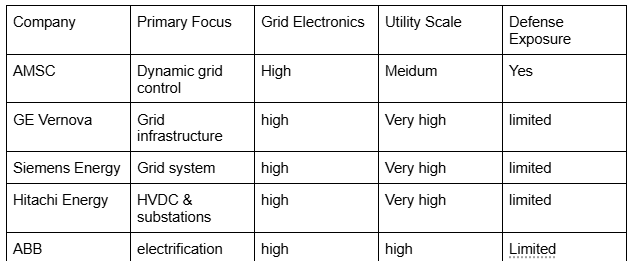
Unlike diversified industrial conglomerates, AMSC derives a significant portion of its value proposition from specialized voltage regulation technologies and grid stabilization equipment.
This specialization may allow the company to benefit disproportionately from accelerating investment in AI infrastructure and utility modernization.
STRATEGIC POSITIONING
The market narrative surrounding AI has largely centered on chips, servers and software. An equally important investment theme may be the infrastructure required to power those technologies.
Electricity generation alone is insufficient.
Power must be transmitted, regulated, stabilized and delivered at utility-grade reliability to facilities consuming unprecedented amounts of energy. AMSC sits directly within this enabling layer.
Its technologies support voltage stability, reactive power compensation and grid resilience, making the company a potential beneficiary of both utility modernization and AI infrastructure investment cycles.
If electricity demand continues expanding as forecast over the next decade, dynamic grid control equipment could become an increasingly critical component of North American electrical infrastructure
Financial Review & Fundamental Analysis
Fiscal 2025 represented another transformational year
The company delivered record revenue while expanding profitability, strengthening its balance sheet and significantly increasing backlog, demonstrating that demand for its grid solutions remains robust across utility, industrial and defense markets.
Key Fiscal 2025 Highlights
• Revenue: $299.2M (+34% YoY)
• 4th Quarter Revenue: $86.4M
• 12-Month Backlog: Approximately $280M (+40% YoY)
• Cash, Cash Equivalents & Restricted Cash: $147.6M
• Non-GAAP profitability remained strong throughout the year
Management also guided for first quarter fiscal 2026 revenue above $85M, suggesting continued momentum entering the new fiscal year. These results reflect both organic expansion and contributions from the Comtrafo acquisition while highlighting accelerating demand for grid modernization products.
REVENUE ANALYSIS
AMSC has evolved from a cyclical niche technology supplier into a diversified electrical infrastructure company with multiple secular growth drivers.
Revenue has accelerated as utilities increase spending on grid resiliency while industrial electrification and defense markets continue expanding.
FY2025 Revenue
FY2024: ~$223M
FY2025: ~$299M
Growth: +34%
This represents one of the strongest annual growth rates in the company’s recent history.
Management attributes this growth to:
• Grid modernization demand
• Utility infrastructure investment
• Renewable integration projects
• Industrial electrification
• Defense programs
• Contributions from recent acquisitions
The revenue mix has also become more diversified than in prior years, reducing dependence on any single customer or project cycle.
GROSS MARGIN ANALYSIS
Gross margins have steadily improved as manufacturing scale increases and higher value grid solutions become a larger percentage of total revenue.
Several structural factors support margin expansion:
• Larger utility project sizes
• Improved manufacturing utilization
• Higher software and engineering content
• Increased operating leverage
• Better product mix
Management has repeatedly emphasized disciplined pricing and project selection, helping maintain attractive margins despite inflationary pressures and supply chain volatility.
As production volumes increase, incremental revenue should increasingly fall through to operating profit.
This operating leverage represents one of the most attractive aspects of the long-term investment thesis.
BACKLOG ANALYSIS
Backlog remains one of the strongest leading indicators of future revenue visibility.
AMSC exited fiscal 2025 with an estimated 12 month backlog approaching $280M representing nearly a 40% increase vss the prior year.
Backlog Growth
FY2024
↓
Approximately $200M
↓
FY2025
Approximately $280M
This backlog provides substantial revenue visibility while demonstrating continued customer demand for utility-scale electrical infrastructure projects.
Utility projects often require long planning cycles, making backlog particularly valuable as an indicator of future financial performance.
Continued backlog expansion would likely support sustained revenue growth into fiscal 2026 and beyond.
CASH FLOW ANALYSIS
Cash generation has improved materially as profitability increases.
Historically, AMSC consumed cash while investing heavily in research and commercialization efforts.
Today the company generates positive operating cash flow while maintaining significant liquidity for future investment opportunities.
Positive operating cash flow supports:
• Manufacturing expansion
• Working capital needs
• Acquisitions
• Research and development
• Strategic flexibility
Improving cash generation reduces financing risk and strengthens management’s ability to pursue long-term growth initiatives without significant shareholder dilution.
BALANCE SHEET REVIEW
AMSC exits fiscal 2025 in its strongest financial position in many years.
Cash and restricted cash totaled approximately $147.6M at fiscal year end, providing significant liquidity relative to the company’s historical capital requirements.
Balance Sheet Strengths
✓ Strong cash reserves
✓ Positive profitability
✓ Growing backlog
✓ Improving operating cash flow
✓ Capacity for strategic acquisitions
The company’s improved financial flexibility should allow continued investment in manufacturing capacity, product development and international expansion while supporting future grid modernization opportunities.
Relative to many emerging industrial technology companies, AMSC now possesses a considerably stronger financial foundation.
FINANCIAL OUTLOOK
Looking forward, several financial themes deserve close attention.
Revenue growth will likely remain driven by utility modernization, renewable integration, AI infrastructure spending and defense applications.
Investors should monitor:
• Quarterly bookings
• Backlog expansion
• Gross margin progression
• Operating margin improvement
• Cash generation
• Working capital efficiency
• Manufacturing capacity utilization
If management successfully converts backlog into revenue while maintaining current margin trends, operating leverage could drive earnings growth that exceeds revenue growth over the next several fiscal years.
The combination of secular infrastructure demand, increasing grid complexity and accelerating electricity consumption may position AMSC for a multi-year expansion cycle supported by improving financial fundamentals rather than speculative future technologies alone.
Valuation, Risks, Catalysts & Investment Conclusion
INVESTMENT SUMMARY
American Superconductor represents a differentiated infrastructure company positioned at the intersection of several long-duration secular growth trends.
Unlike companies focused on electricity generation, AMSC enables the efficient transmission, regulation and stabilization of electricity once it enters the grid.
As utilities modernize aging infrastructure and AI data centers drive unprecedented load growth, the need for dynamic voltage regulation and reactive power compensation is expected to increase materially over the coming decade.
The company’s technology portfolio positions it as a supplier of critical enabling infrastructure rather than discretionary industrial equipment.
This distinction may allow AMSC to participate in multiple independent growth cycles simultaneously.
• AI infrastructure expansion
• Grid modernization
• Renewable energy integration
• Industrial electrification
• Defense electrification
RELATIVE VALUATION
Traditional valuation metrics often struggle to capture companies undergoing significant business transformation.
Historically, AMSC traded as a speculative technology company with inconsistent profitability.
Today, the business increasingly resembles a specialized electrical infrastructure supplier with improving margins, recurring utility relationships and expanding backlog.
Comparable peer groups include:
• GE Vernova
• Hitachi Energy
• Siemens Energy
• ABB
• Powell Industries
• Vertiv
• Eaton
While considerably smaller than these global competitors, AMSC may justify premium revenue multiples if management continues executing against long-term growth opportunities in utility infrastructure and AI power quality solutions.
Investors should evaluate AMSC based on future infrastructure spending cycles rather than historical financial performance alone.
DCF FRAMEWORK
A discounted cash flow framework suggests that long-term valuation is highly sensitive to revenue growth and operating margin expansion.
Base assumptions:
Revenue Growth
2026-2030
12% to 18% CAGR
Operating Margin
12% to 16%
Tax Rate
21%
Terminal Growth
3%
Discount Rate
9%
Under these assumptions, intrinsic value increases substantially if operating leverage continues improving and backlog converts into recurring revenue growth.
The largest valuation driver is not near-term earnings, but rather the duration of future utility modernization spending and AI-driven electrical infrastructure investment.
BULL CASE
The bullish scenario assumes:
• AI data center construction accelerates
• Utilities expand transmission investment
• Grid modernization funding increases
• Renewable integration continues
• Defense revenue expands
• Manufacturing scale improves margins
Under this scenario:
Revenue compounds at double-digit rates for several years while fixed manufacturing costs become increasingly leveraged.
Operating margins expand significantly.
Free cash flow generation accelerates.
The market begins valuing AMSC similarly to other infrastructure technology providers rather than legacy industrial suppliers.
In this scenario, valuation multiples could expand alongside earnings growth.
BASE CASE
The base case assumes:
• Utility spending remains healthy
• AI infrastructure demand remains robust
• Defense business grows steadily
• Margin expansion continues gradually
Revenue growth moderates into the low-to-mid teens while profitability steadily improves.
Backlog remains elevated and cash generation strengthens.
The company continues executing without requiring extraordinary industry conditions.
This scenario supports attractive long-term shareholder returns driven by both earnings growth and multiple expansion.
BEAR CASE
The primary downside scenario includes:
• Utility project delays
• AI infrastructure spending slows
• Capital expenditures decline
• Large projects shift into future fiscal years
• Competitive pricing pressures increase
• Supply chain disruptions return
Because utility projects often have extended development timelines, quarterly financial results may remain volatile despite strong long-term demand fundamentals.
Execution risk remains meaningful for a company of AMSC’s size.
KEY RISKS
Execution Risk
Large utility projects require complex engineering and installation schedules that may delay revenue recognition.
Customer Concentration
Large infrastructure awards can create periodic customer concentration risk.
Competition
Large industrial competitors possess significantly greater manufacturing scale and financial resources.
Government Policy
Infrastructure spending priorities and regulatory policy can influence utility capital expenditures.
Supply Chain
Power electronics, transformers and semiconductor components remain susceptible to global supply constraints.
Technology Adoption
Utilities tend to adopt new technologies slowly due to reliability requirements and regulatory oversight.
Valuation Risk
High investor expectations surrounding AI infrastructure could produce elevated valuation multiples that become vulnerable during periods of slower growth.
LONG-TERM CATALYSTS
Several catalysts could materially impact long-term shareholder value.
Near-Term
• Large utility contract awards
• Additional AI infrastructure projects
• New STATCOM deployments
• Book-to-bill above 1.0
• Margin expansion
Intermediate
• Defense contract wins
• International utility expansion
• Manufacturing capacity growth
• Large renewable integration projects
Long-Term
• AI hyperscale campus expansion
• National transmission investment
• Electrification of industry
• Smart grid deployment
• Grid resiliency legislation
• Increased reactive power compensation adoption
WHY THE GRID MATTERS
Modern economies require stable electricity.
The conversation surrounding artificial intelligence has focused primarily on GPUs, cloud providers and semiconductor manufacturing.
Far less attention has been paid to the electrical infrastructure necessary to support these technologies.
Electricity must be generated.
It must then be transmitted hundreds of miles.
Voltage must remain stable.
Reactive power must be balanced.
Power quality must remain within narrow operating limits.
Without these functions, advanced computing infrastructure cannot operate reliably.
AMSC develops technologies that solve these problems.
As electrical demand accelerates, companies enabling grid stability may become increasingly valuable participants in the AI investment cycle.
INVESTMENT CONCLUSION
AMSC has undergone a remarkable transformation over the past decade.
The company has evolved from a niche superconducting technology developer into a provider of mission-critical electrical infrastructure supporting utilities, renewable energy, industrial facilities and defense applications.
Its products occupy a specialized position within the electrical ecosystem, improving voltage stability, reactive power management and transmission efficiency.
As AI infrastructure expands and utilities modernize aging electrical networks, demand for these capabilities could increase substantially.
Although execution risks remain and project timing may create earnings volatility, the long-term secular trends supporting the business appear stronger than at any point in the company’s history.
For investors seeking exposure to the electrical infrastructure underpinning the AI revolution, AMSC represents a differentiated small-cap opportunity with meaningful operating leverage, expanding backlog and participation in multiple long-duration infrastructure investment cycles.
The next decade may not simply belong to companies generating electricity.
It may belong equally to companies that make the grid capable of delivering it.